
In both cities and rural towns, Kentucky renters are turning to insurance for affordable protection against costly repairs or lost items.
How Much Does Renters Insurance Cost in Kentucky?
Here are real quotes from Kentucky renters, including those living in Bowling Green, Hickman, and Covington. They're based on up-to-date user data.
| Quote Date | City | Monthly Premium | Property Type | Age Group |
|---|---|---|---|---|
| March 11, 2026 | Bowling Green, Kentucky | $12 | Apartment | 55+ |
| March 11, 2026 | Hickman, Kentucky | $51 | Apartment | 35–44 |
| March 11, 2026 | Covington, Kentucky | $29 | Apartment | 45–54 |
| March 11, 2026 | Covington, Kentucky | $26 | Apartment | 45–54 |
| March 11, 2026 | Covington, Kentucky | $32 | Apartment | 55+ |
* Selected, anonymized quotes from past submissions. Last updated: March 11, 2026.
Renters insurance is one of the most affordable insurance products available, yet it can protect you financially from many risks. Kentucky tenants pay slightly lower than the national average. The chart below compares four states with close premiums and the national average.
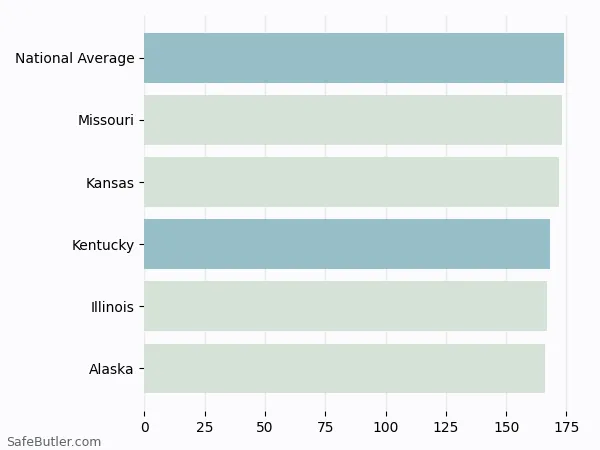
Kentucky renters insurance costs are at or near national average the national average. The actual premium you pay depends on your location, coverage amount, deductible, and personal factors like claims history and credit score.
If you want to know how much it costs for your rental home, hit the big button below to get free quotes.
Compare your options now — it's free
What Does Renters Insurance Cover in Kentucky?
A standard renters insurance policy (also called an HO-4 policy) in Kentucky typically includes four types of coverage:
Personal Property Coverage
Protects your belongings — furniture, electronics, clothing, and other personal items — against covered perils like fire, theft, and vandalism. You can choose between actual cash value (depreciated value) or replacement cost (full cost to replace).
Liability Coverage
Covers legal expenses and damages if someone is injured in your rental unit or if you accidentally damage someone else's property. Most policies start at $100,000, but higher limits are available.
Additional Living Expenses (ALE)
Pays for temporary housing, meals, and other living expenses if your rental becomes uninhabitable due to a covered event — particularly important in Kentucky given risks like storms, floods, and snowing.
Medical Payments to Others
Covers minor medical expenses for guests injured in your home, regardless of fault. Typically ranges from $1,000 to $5,000 and helps avoid liability claims for small injuries.
What Renters Insurance Does NOT Cover in Kentucky
Standard renters insurance policies have important exclusions. In Kentucky, you should be aware of these common gaps:
- Flood damage — Requires a separate flood insurance policy through the National Flood Insurance Program (NFIP) or a private insurer
- Earthquake damage — Requires a separate earthquake policy or endorsement
- Roommate's belongings — Only covers items belonging to the named policyholder unless roommates are listed on the policy
- Expensive items over limits — Jewelry, art, and collectibles may have sub-limits; consider scheduled personal property coverage for high-value items
- Intentional damage or neglect — Damage you cause deliberately or through failure to maintain is not covered
Kentucky renters in eastern Appalachian areas face exceptional flash flood risk and should carry flood insurance. The 2021 tornado outbreak showed that even areas outside traditional Tornado Alley can be devastated — adequate displacement coverage is important statewide.
Is Renters Insurance Required in Kentucky?
Kentucky does not mandate renters insurance. Landlords may require it as part of the lease. Kentucky Revised Statutes Chapter 383 (Uniform Residential Landlord and Tenant Act) governs applicable rental relationships.
Even when not legally required, having renters insurance is strongly recommended. Your landlord's insurance covers the building structure but does not protect your personal belongings, cover your liability, or pay for temporary housing if you're displaced.
Kentucky does not cap security deposits statewide but requires refunds within 30-60 days. The state adopted the Uniform Residential Landlord and Tenant Act, but some counties have opted out, leaving tenants with fewer protections in those areas.
How Much Renters Insurance Coverage Do You Need in Kentucky?
Kentucky's low to moderate cost of living means $15,000-$25,000 in coverage is typically sufficient. Flood insurance is essential for renters in eastern Kentucky and along the Ohio River.
To determine your ideal coverage amount, follow these steps:
- Create a home inventory — Go room by room and list your belongings with their estimated value. Include furniture, electronics, clothing, kitchen items, and personal items.
- Choose replacement cost vs. actual cash value — Replacement cost policies pay to replace items at current prices, while actual cash value accounts for depreciation. Replacement cost is typically worth the slightly higher premium.
- Select your deductible — A $250-$500 deductible is common in Kentucky. Higher deductibles lower your premium but increase your out-of-pocket costs when filing a claim.
- Consider liability needs — The standard $100,000 liability limit may not be enough if you have significant assets. Consider increasing to $300,000 or adding an umbrella policy.
Find the best renters insurance in Kentucky
Compare the top insurance brands at once for free
What Factors Impact the Renters Insurance Premium in Kentucky?
- The amount of coverage you chose
- The value of your personal property and whether your policy covers ACV or replacement costs
- The amount of your deductible
- The amount of liability coverage you choose
- The location of your rental home
Are the crime rates exceptionally high in your neighborhood? Rates may be higher as a result. Is the area prone to higher risks for wind or hurricane damage? These factors matter as well. - Discounts
You may be eligible for discounts if you have purchased other insurance policies with the provider or bundled your insurance. There are also discounts available for renters with added security features- such as deadbolt locks, security systems, smoke detectors, etc.
In Kentucky specifically, your location within the state significantly affects pricing. Renters in Louisville may pay different rates than those in Lexington or Bowling Green due to varying crime rates, weather patterns, and claims history in each area.
What Are the Kentucky Renters Insurance Discounts?
Most carriers provide various discounts for renters insurance, just like auto insurance. Here are the most common discounts available to Kentucky renters:
| Discount | Description | Typical Savings |
|---|---|---|
| Multi-Policy Bundle | Bundle renters with auto, life, or other insurance from the same company. This is one of the largest discounts available. | 5-15% |
| Secure Home | Qualify by having fire extinguishers, burglar alarms, deadbolts, smoke detectors, or living in a gated community or secured building. | 2-10% |
| Claim-Free | Just like auto insurance rewards accident-free drivers, renters insurance is cheaper for tenants who haven't filed claims. The longer your claim-free streak, the bigger the discount. | 5-20% |
| Age / Senior | Older policyholders often qualify for lower rates. If you're a college student renting near campus, expect to pay more due to higher risk profiles in younger demographics. | 5-10% |
| Good Credit | A credit score above 700 typically qualifies for better rates. In most states, insurers use credit-based insurance scores as a rating factor. | 5-15% |
| Pay-in-Full | Paying your annual premium upfront instead of monthly installments eliminates installment fees and can result in meaningful savings. | 5-10% |
| Paperless / Autopay | Opting for electronic documents and automatic payments can earn additional savings. More modern insurance companies build these savings into their base rate. | 1-5% |
| Loyalty | Some carriers offer increasing discounts the longer you maintain a policy with them. This can compound with other discounts. | 3-10% |
What Are the Risks to Consider in Kentucky?
Kentucky experiences tornadoes, including the devastating December 2021 tornado outbreak. Flash flooding in the mountainous eastern part of the state is a recurring and deadly hazard, as shown by the July 2022 eastern Kentucky floods. Ice storms can cause widespread power outages.
Humid subtropical climate brings severe thunderstorms. Flash flooding in Appalachian valleys is a serious risk. Winter ice storms can paralyze the state for days.


Last but not least, identity theft protection is an increasingly important add-on to consider. With growing cyber threats and data breaches, many insurers now offer identity theft coverage as an endorsement to your renters policy. Check with your insurance provider about adding this valuable protection.
How to Find the Best Renters Insurance in Kentucky
Finding the right renters insurance policy in Kentucky requires comparing multiple factors beyond just price. Here's what to look for:
- Compare quotes from multiple carriers — Prices can vary significantly between companies for the same coverage. Use SafeButler to compare options from dozens of carriers in minutes.
- Check financial strength ratings — Look for insurers rated A or better by AM Best. This indicates the company can pay claims reliably.
- Read the policy exclusions — Understand what's not covered, especially regarding Kentucky-specific risks like storms, floods, and snowing.
- Consider the claims process — Research how easy it is to file claims. Some modern insurers offer app-based claims filing with faster payouts.
- Look beyond price — The cheapest policy isn't always the best. Evaluate the coverage limits, deductible, and customer service reputation.
Compare Kentucky renters insurance quotes — it's free
Kentucky Tenant Rights and Insurance
Kentucky's adoption of the Uniform Residential Landlord and Tenant Act varies by county. Tenants in opted-out counties may have limited protections. Renters should check whether their county follows the act.
For more information about renters insurance regulations in Kentucky, visit the Kentucky Department of Insurance.
Renters Insurance Rates for Cities in Kentucky
We compiled renters insurance rate data for every city in Kentucky. Premiums can vary significantly based on local crime rates, weather risk, and housing characteristics. Click on any city below to see detailed pricing and coverage information.
The most popular cities for renters in Kentucky include Louisville, Lexington, Bowling Green, Covington and Owensboro. Each city has its own risk profile and average premium.
- Alexandria
- Ashland
- Bardstown
- Bellevue
- Berea
- Bowling Green
- Buechel
- Burlington
- Campbellsville
- Corbin
- Covington
- Cynthiana
- Danville
- Edgewood
- Elizabethtown
- Elsmere
- Erlanger
- Fairdale
- Fern Creek
- Flatwoods
- Florence
- Fort Campbell North
- Fort Knox
- Fort Mitchell
- Fort Thomas
- Frankfort
- Franklin
- Georgetown
- Glasgow
- Harrodsburg
- Henderson
- Highland Heights
- Highview
- Hillview
- Hopkinsville
- Independence
- Jeffersontown
- Lawrenceburg
- Leitchfield
- Lexington-Fayette
- Louisville
- Lyndon
- Madisonville
- Mayfield
- Maysville
- Middlesborough
- Mount Washington
- Murray
- Newburg
- Newport
- Nicholasville
- Oak Grove
- Oakbrook
- Okolona
- Owensboro
- Paducah
- Paris
- Pikeville
- Pleasure Ridge Park
- Princeton
- Radcliff
- Richmond
- Russellville
- Shelbyville
- Shepherdsville
- Shively
- Somerset
- St. Dennis
- St. Matthews
- Taylor Mill
- Valley Station
- Versailles
- Villa Hills
- Winchester
Find the best renters insurance in Kentucky
Compare the top insurance brands at once for free
Frequently Asked Questions About Kentucky Renters Insurance
How much does renters insurance cost in Kentucky?
The average renters insurance premium in Kentucky is $168, which is close to the national average. The costs varies a lot from the cost of your personal property, the deductible you choose, and other factors.
Is renters insurance required in Kentucky?
Kentucky does not mandate renters insurance. Landlords may require it as part of the lease. Kentucky Revised Statutes Chapter 383 (Uniform Residential Landlord and Tenant Act) governs applicable rental relationships.
What does renters insurance cover in Kentucky?
A standard renters insurance policy in Kentucky covers four main areas: personal property protection (your belongings against fire, theft, and vandalism), liability coverage (if someone is injured in your home), additional living expenses (temporary housing if your rental is uninhabitable), and medical payments to others (minor medical expenses for injured guests).
What are the main risks for renters in Kentucky?
Kentucky experiences tornadoes, including the devastating December 2021 tornado outbreak. Flash flooding in the mountainous eastern part of the state is a recurring and deadly hazard, as shown by the July 2022 eastern Kentucky floods. Ice storms can cause widespread power outages.
What discounts are available for renters insurance in Kentucky?
Common renters insurance discounts in Kentucky include multi-policy bundling (5-15% off), claim-free history (5-20% off), security devices like alarms and deadbolts (2-10% off), good credit scores (5-15% off), and pay-in-full annual payment (5-10% off). Stacking multiple discounts can reduce your premium by 20-40%.
How much renters insurance coverage do I need in Kentucky?
Kentucky's low to moderate cost of living means $15,000-$25,000 in coverage is typically sufficient. Flood insurance is essential for renters in eastern Kentucky and along the Ohio River. We recommend replacement cost coverage over actual cash value for the most complete protection.
What is the recommended deductible for renters insurance in Kentucky?
A $250-$500 deductible is typical for renters insurance in Kentucky. A higher deductible lowers your monthly premium but means you'll pay more out of pocket when filing a claim. Choose a deductible you can comfortably afford in an emergency.
References
Find your perfect insurance policy
Compare the top insurance brands at once for free
Disclaimer
Our articles are informational and should not be considered legal or financial advice. Our
articles are not written or reviewed by insurance agents. Consult your policies with your agent or a
professional for details regarding terms, conditions, coverage, exclusions, products, services, and programs.
SafeButler Inc. strives to ensure that the information on this site is up to date, but we will not be held
liable for any delays, inaccuracies, errors, or omissions. This site and all materials contained on it are
distributed and provided "as is" and "as available" for use. SafeButler.com makes no representations or
warranties of any kind, express or implied, as to the operation of this site or to the information, content,
materials, or products included on this site. You expressly agree that your use of this site is at your sole
risk.